The Quiet Reshaping of Web Design & Development in the AI Economy
· Web Design
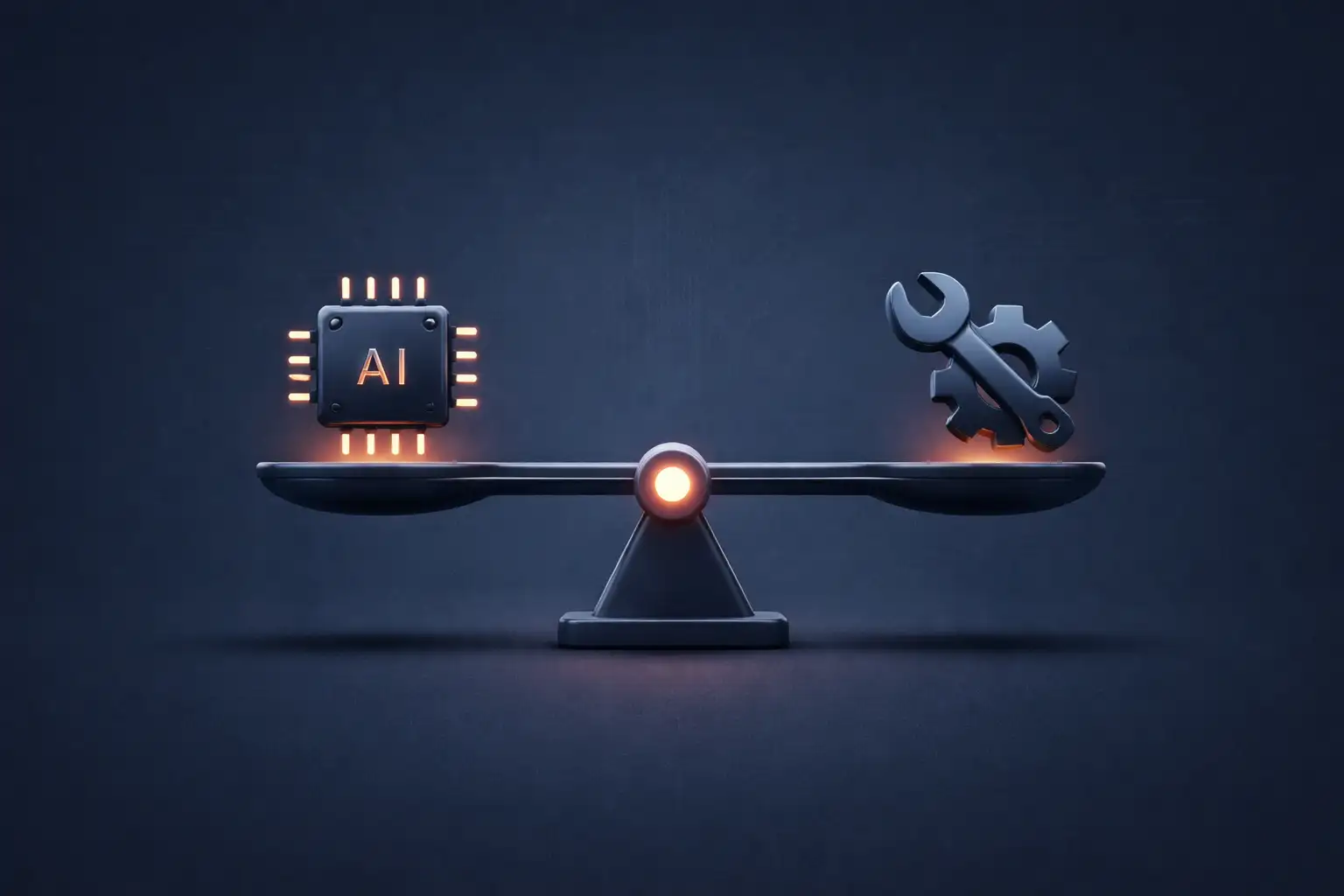
Generative AI isn’t replacing web designers and developers; it’s reshaping where the value sits, shifting more work toward strategy, systems, and integration. As clients use AI for first drafts, the real edge is still human judgment across infrastructure, performance, security, and launch accountability.
The Quiet Reshaping of Web Design & Development in the AI Economy
Since the formal emergence of generative AI into the mainstream, most notably following the public release of ChatGPT in late 2022, the web design and development industry has entered a period of subtle but profound change. This shift isn't defined by mass layoffs, overnight obsolescence, or AI "replacing" designers and developers. Instead, it's marked by something more nuanced: a rebalancing of who does what, how value is created, and what clients are willing to pay for in a rapidly evolving digital economy. Many businesses that once relied exclusively on external expertise for website development, SEO, and content creation are now supplementing that expertise with AI tools. At the same time, designers, developers, and marketers are making deeper investments (financial, educational, and strategic) into those same tools to remain competitive. This isn't a collapse of the industry. It's a recalibration.
From Outsourcing to Augmentation
One of the most noticeable changes in the current landscape is how clients approach professional services. Businesses that would have historically outsourced everything, from copywriting to basic SEO research, are now using AI as a first pass. Drafting content internally. Exploring keyword ideas. Generating rough layouts or wireframes. For some professionals, this initially felt like a threat. But among the developers and designers I know personally, the prevailing response hasn't been resistance; it's been adaptation. Many have diversified their services, doubled down on learning AI tools, and reframed their role entirely. Not because they want AI to "do the work for them," but because ignoring a technology with this level of momentum comes with real income implications. Fighting the tide rarely ends well. Instead, the professionals staying afloat are those who understand where AI fits, and where it doesn't.
The Parts AI Still Can't Touch (Yet)
Despite the growing sophistication of AI-driven website builders and design tools, the actual mechanics of launching and maintaining a website remain largely unchanged.
- Domains still need to be purchased and configured.
- DNS records still need to be set correctly.
- Hosting environments still require management.
- Security, performance optimization, compliance, and scalability still demand human oversight. These steps are procedural, sensitive, and often tied to private credentials and infrastructure. At least for now, they fall outside what AI can responsibly or practically handle. This is an important distinction. AI is increasingly effective at suggesting, generating, and accelerating work, but the systematic nature of development means there are still formal steps that require direct human involvement. Not because AI isn't smart enough, but because trust, access, and accountability still matter. In many ways, this has shifted the developer's role from "builder" to architect, integrator, and steward of systems.
Designers Who Learn AI Aren't Replaced; They're Multiplied
Another pattern that's become increasingly clear is that designers and developers who embrace AI tend to use it less for replacement and more for leverage. AI excels at:
- Rapid research synthesis - Exploring multiple creative directions quickly - Accelerating repetitive or boilerplate tasks - Providing alternative perspectives or technical suggestions Used thoughtfully, these tools reduce friction, not craftsmanship. The result isn't lower-quality work. It's faster iteration, deeper research, and more time spent on judgment, strategy, and refinement, the areas where experience still matters most. In practice, this often means fewer billable hours spent "doing," and more spent "deciding." That shift has economic consequences, but it also opens the door to more value-driven pricing models rather than pure time-based billing.
The "AI Bubble" Debate Misses the Bigger Picture
Throughout 2025, the idea of an "AI bubble" became a frequent talking point. Comparisons to the dot-com boom, and its eventual collapse, are common. But history offers an important lesson here. When the internet bubble burst in the late 1990s, the internet didn't disappear. It matured. Excess speculation burned off. Unsustainable companies failed. But the underlying technology became more structured, regulated, and embedded into everyday life. AI appears to be on a similar trajectory. Even if market corrections occur, the level of investment, infrastructure, and research already poured into AI makes a full rollback unrealistic. Short of shutting down data centers and dismantling entire industries, AI usage is more likely to evolve into a more measured, integrated, and professionalized state, much like the internet did. For web designers and developers, this suggests a future that isn't about chasing trends, but about understanding how AI fits into long-term digital ecosystems.
A More Sophisticated, Not Simplified, Industry
The irony of the current moment is that while AI tools are making some tasks easier, the overall landscape is becoming more complex.
- Clients are more informed, but also more overwhelmed.
- Tools are more powerful, but more fragmented.
- Expectations are higher, even as budgets tighten. This places designers and developers in a new position of responsibility: not just as implementers, but as guides. Those who thrive will likely be the ones who:
- Understand both AI tools and foundational web infrastructure - Can translate between automation and real-world business goals - Offer clarity, not just output, in an increasingly noisy space The web design and development economy isn't shrinking; it's selecting. And like every major technological shift before it, the professionals who survive won't be the ones who resisted change or blindly embraced it, but those who learned how to work with it, deliberately and critically.
Closing Thought
AI hasn't ended the need for designers, developers, or SEO professionals. It has simply raised the bar for what expertise now looks like. And that, for those willing to adapt, may be the real opportunity.
Interested in Achieving Similar Results for Your Business?
My website design services blend AI-augmented workflows with hands-on craftsmanship. I offer professional web development for businesses navigating this evolving landscape. Victoria and Vancouver Island businesses can explore my local web design services. Contact me at EdgeCraft Digital today! ---